

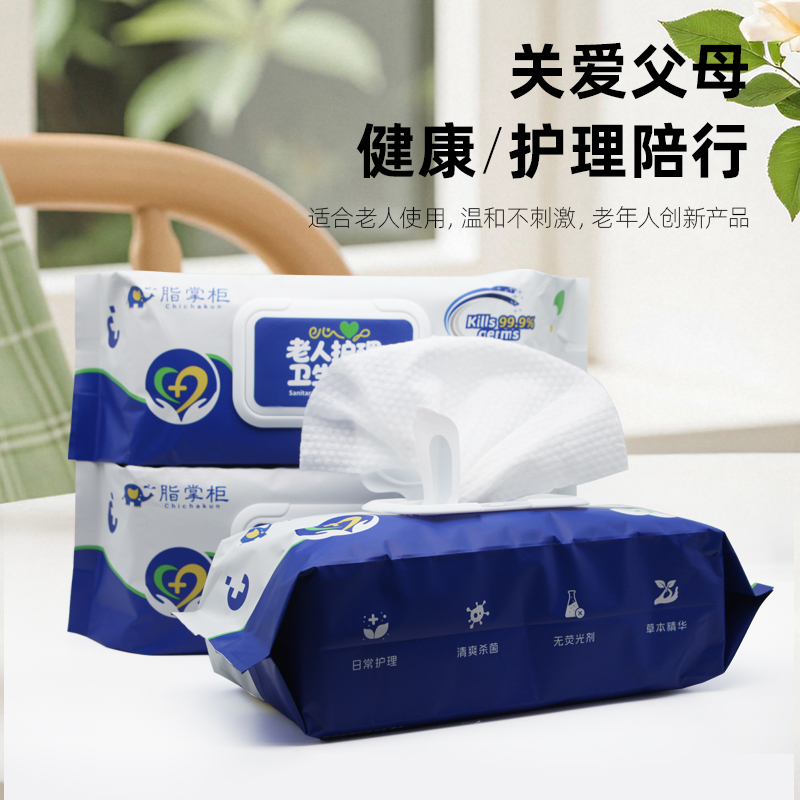
According to industry observations, more than 29% of Japan’s population is aged 65 and above, while South Korea is rapidly entering a “super-aged society.” In this context, improving quality of life for seniors while reducing caregiving burdens has become a key social priority. Compared to traditional cleaning methods, wet wipes are gaining popularity due to their convenience, safety, and multifunctional applications.
In Japan, caregiving facilities and home care environments widely use specialized Elderly Care Wipes for daily hygiene, incontinence care, and full-body cleaning for bedridden individuals. These products typically emphasize gentle formulations, antibacterial protection, and skin-friendly properties, helping to reduce the risk of skin irritation and related issues. Personal Hygiene Wipes are also commonly used for on-the-go cleaning and supplementary care.
In South Korea, the market shows a stronger focus on product segmentation and premiumization. Consumers are not only concerned with the effectiveness of Sanitary Wipes but also place increasing importance on ingredient safety, eco-friendly materials, and convenient packaging. In home care scenarios, multifunctional wipes that combine cleansing, antibacterial, and skin-care benefits are particularly favored.
At the product level, the wet wipes category continues to diversify, covering segments such as Sanitary Wipes, Elderly Care Wipes, and Personal Hygiene Wipes to meet the practical needs of various care situations. These products generally highlight mild, low-irritation formulations and skin-friendly properties, playing an increasingly important role in daily hygiene and care for elderly populations.
Industry experts note that, in the coming years, the elderly care wet wipes market in South Korea and Japan is expected to maintain steady growth. As consumer awareness of health, hygiene, and product quality continues to rise, brands with differentiated positioning and strong product performance are likely to gain a competitive edge.
Overall, elderly care wet wipes are evolving from supplementary products into essential tools for improving quality of life in aging societies. Driven by both demographic trends and product innovation, this niche market is poised for significant expansion.